
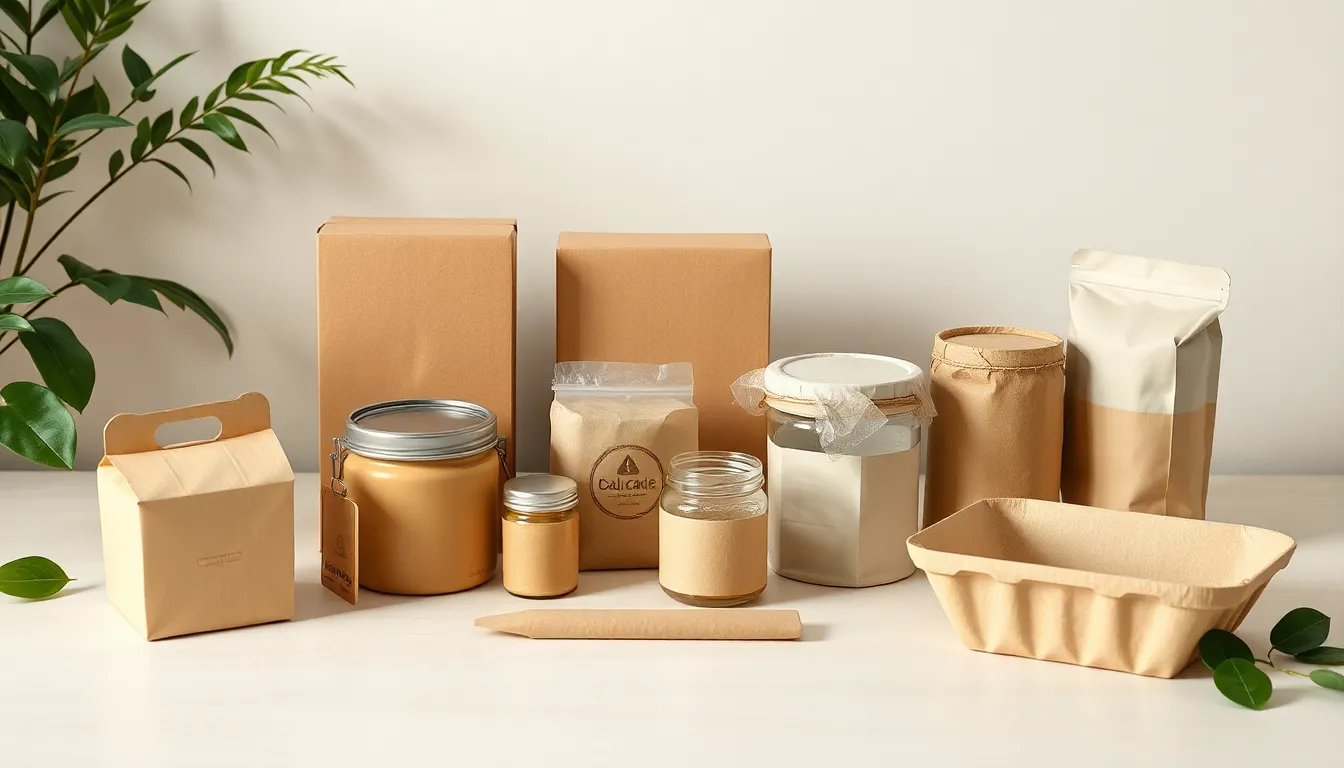
Table of Contents:
Material Choices That Lower Packaging Impact
Material choice sets the direction of a package’s environmental impact. The best option is not always the material with the greenest label. It is the one that protects the product with the least material, fits local recycling systems, and works well through its full life cycle.
Recycled paperboard is a strong choice for dry goods, books, apparel, and many online orders. Choose a high recycled-fibre content and avoid plastic lamination. A simple water-based coating can protect the surface while keeping the pack easier to process in paper recycling.
Fibre-based packaging can also replace plastic inserts. Molded pulp trays made from recovered paper or plant fibre cushion cosmetics, electronics, and glass items. They can be shaped to hold a product firmly, reducing the need for foam and extra void fill.
For bottles, jars, and refill systems, recycled glass gives a useful second-life route, especially when the container stays in a local return loop. However, glass is heavy. Short transport distances, strong refill rates, and efficient collection matter more than the material name alone.
Recycled aluminium works well for cans, tins, and small personal-care containers. It is light, durable, and valuable in recycling systems. Use it where barrier protection is needed, but keep lids, liners, and mixed-material parts to a minimum.
Bio-based plastics deserve a closer look. Materials such as PLA may suit selected cold-food uses, yet they need the right industrial composting conditions. A compostable claim can mislead customers when local facilities do not accept the item. In many cases, a recyclable mono-material performs better in practice.
- Check whether the material is accepted by the collection system in the target market.
- Prefer one material over bonded layers that are hard to separate.
- Specify recycled content with a verified chain of custody.
- Avoid additives, dark pigments, and coatings that disrupt sorting or reprocessing.
- Compare material weight, protection, transport, reuse, and end-of-life performance together.
Certification can support responsible sourcing, but it does not replace a packaging assessment. Ask suppliers for recycled-content data, fibre origin, barrier composition, food-contact compliance, and recycling guidance. A modest pack that works in real waste systems often beats a novel material that sounds impressive but has nowhere useful to go.
Mailer Boxes and Shipping Cartons Made for Circularity
Mailer boxes and shipping cartons become more circular when they are designed for repeated use, simple sorting, and efficient recovery. The strongest designs treat the box as part of a system, not as a disposable shell.
A practical example is a corrugated board box with a single fibre structure, water-based printing, and a tear strip made from paper. It can protect clothing, books, or household goods without adding a separate plastic pouch. Once opened, the customer can flatten it and place it in the paper stream.
Right-sizing is equally important. A box that closely matches the product needs less cushioning and leaves less empty space in delivery vehicles. For online orders, adjustable-depth cartons can reduce the number of box sizes in stock while keeping the contents secure. This small design change can cut unused volume across thousands of parcels.
Closure design also shapes the next use. A second adhesive strip lets customers seal a return without extra tape. Reinforced hand holes make some cartons easier to carry, while a clean fold line helps users turn a shipping box into storage. These features extend usefulness without adding much material.
- Use corrugated board grades that match the product’s weight and fragility.
- Keep windows, foam pads, and plastic film out of the carton where possible.
- Print recycling instructions directly on an uncoated panel.
- Place labels on a removable area or use paper-compatible adhesive.
- Test compression, drop, vibration, and moisture resistance before reducing board weight.
Designers should also consider warehouse handling. A carton that stacks poorly may cause product damage, which can outweigh material savings. The better target is not the lightest box at any cost, but the lowest material use that still survives packing, transport, delivery, and return.
For circular shipping, specify measurable requirements: recycled fibre percentage, board weight, box dimensions, print coverage, adhesive type, and local recovery route. Suppliers can then compare prototypes on performance rather than vague claims. The humble cardboard box, done properly, is still a remarkably clever bit of engineering.
Sustainable Packaging Formats and Their Environmental Advantages
| Packaging example | Suitable applications | Environmental benefit | Important consideration |
|---|---|---|---|
| Recycled paperboard cartons | Dry goods, books, apparel, and online orders | Uses recovered fibre and can enter established paper-recycling streams | Avoid plastic lamination and unnecessary coatings |
| Molded fibre inserts | Cosmetics, electronics, glass items, and fragile goods | Replaces foam and plastic inserts while keeping products secure | Use recovered paper or plant fibre and verify local recyclability |
| Right-sized corrugated mailer boxes | E-commerce, returns, clothing, and household products | Reduces void space, cushioning needs, and transport volume | Test compression, drops, vibration, and moisture resistance |
| Returnable glass containers | Beverages, sauces, pantry goods, and local refill systems | Supports repeated use and avoids single-use containers | Requires convenient collection, efficient washing, and high return rates |
| Recycled aluminium cans and tins | Beverages, personal-care products, and food containers | Lightweight, durable, and valuable in established recycling systems | Minimise mixed-material lids, liners, and attachments |
| Reusable cotton totes | Retail shopping, campaigns, and regular customer orders | Can replace many disposable bags when used repeatedly | Choose durable, appropriately weighted fabric and promote repeated use |
| Paper tape and paper-compatible labels | Parcel sealing, product labels, and shipping cartons | Helps keep fibre-based packaging within a compatible recycling stream | Confirm adhesive and label repulpability with the supplier |
| Returnable food containers | Restaurants, offices, grocery delivery, and takeaway meals | Reduces single-use food packaging through multiple circulation cycles | Track return rates, washing energy, transport, breakage, and average cycles |
| Mono-material cosmetic packaging | Creams, gels, soaps, powders, and fragrances | Simplifies sorting and can reduce bonded plastic, foil, and paper layers | Ensure the structure still provides adequate product protection |
| Plastic-free paper fillers | Fragile products, bottles, gifts, and household goods | Provides cushioning without plastic air pillows or foam | Design out unnecessary filler through product nesting and fitted inserts |
Paper Bags and Reusable Cotton Totes
Paper bags work best when their useful life matches the shopping task. A lightweight kraft bag may suit a bakery purchase, while a reinforced paper handle bag can serve repeated retail trips. The key detail is not the appearance, but the number of practical uses before the bag tears, gets wet, or is discarded.
Choose a bag size that fits the usual order. Oversized bags waste paper and may need extra handles or folded layers for strength. Flat-bottom designs can stand upright and carry heavier items, but they use more material. For small purchases, a compact twisted-handle bag is often the leaner option.
Reusable cotton totes follow a different logic. Their impact depends on repeated use, washing, transport, and end of life. A durable tote used many times can replace many disposable bags. A thick, heavily printed tote bought for one event is a different story: it may consume far more fibre, water, and energy during production.
- Match the fabric weight to the expected load rather than choosing the thickest cloth.
- Use long handles only when shoulder carrying adds real value.
- Design a flat-fold shape so customers can store the tote easily.
- Limit coatings, synthetic trims, and mixed-fibre decorations.
- Print care instructions and washing guidance on a small, durable label.
- Offer a return or repair route for branded totes used in regular campaigns.
For cotton, ask whether the fibre is conventional, organic, recycled, or blended. These labels describe different production systems, not a complete environmental score. A tote made with recycled cotton may reduce virgin fibre demand, while a repairable bag made from a single, durable fabric may last longer in everyday use.
Paper and cotton can also work together in a reuse scheme. A retailer might use paper bags for light, short trips and provide a deposit-based tote for regular customers. Tracking return rates, damage rates, and average uses gives a clearer picture than calling every bag “green.”
Keep claims specific. “Made for 20 uses” is meaningful only when the bag has been tested under defined load and handling conditions. Clear instructions help customers use the bag well, and that is where the real environmental gain often hides.
Plastic-Free Wrapping, Tape, Labels, and Fillers
Small packaging components can decide whether a whole pack is easy to recover or difficult to process. Replacing plastic is useful only when the alternative still protects the product, survives handling, and fits the local recycling route.
Wrapping paper suits books, clothing, gifts, and many dry products. Uncoated paper is usually simpler to sort than glossy, laminated, or foil-backed wrap. For moisture resistance, use the lightest paper treatment that meets the product need. Too much coating can turn a recyclable sheet into a mixed-material problem.
Paper tape can replace plastic parcel tape when its adhesive is compatible with fibre recovery. Reinforced gummed tape is useful for heavier loads because it bonds to the carton and can remain attached during pulping. Standard paper appearance alone proves little, so request repulpability data from the supplier.
For labels, use paper facestocks with adhesives designed for recycling. Large synthetic labels, metallic foils, and full-coverage dark inks may reduce fibre quality or confuse sorting equipment. A small label also leaves more of the package visible for grading and processing.
Plastic-free fillers offer several practical formats:
- Crinkle-cut paper for light cushioning and presentation.
- Paper honeycomb wrap for bottles and fragile household items.
- Corrugated paper pads for separating products in a box.
- Folded paper structures that lock items in place without loose fill.
- Wood wool for selected retail displays, provided dust and food-contact needs are assessed.
Do not replace air cushions with large amounts of paper by default. First test whether folded inserts, product nesting, or a tighter internal fit can remove the need for loose material altogether. The smartest filler is often the one designed out of the pack.
Printing deserves attention too. Mineral-oil-free inks, low-coverage artwork, and clear disposal instructions can reduce process concerns. Avoid vague claims such as “eco tape” or “zero-waste filler.” State the material and disposal route in plain language, and make sure the claim applies to the complete component, including its adhesive, coating, and backing.
Low-Impact Food and Beverage Packaging
Food packaging must protect freshness, prevent leaks, and meet strict hygiene rules. A lower-impact design therefore starts with the product itself: its shelf life, moisture level, temperature, and distribution time. Cutting material without protecting food can create more waste than the package saves.
Edible products with dry contents often need less complex packaging. Recyclable paperboard cartons, refillable jars, and lightweight paper sachets can suit cereals, tea, spices, and bakery goods when they provide enough protection from light and moisture. Avoid adding a barrier layer unless testing shows it is needed.
For fresh food, returnable containers can work well in controlled delivery networks. Restaurants, offices, and local grocery schemes can collect, wash, inspect, and recirculate durable tubs. The model becomes stronger when return points are convenient and the container completes many cycles.
Deposit systems make this approach easier to measure. A customer pays a small deposit, returns the container, and receives the deposit back. Operators should track return rates, washing energy, transport distance, breakage, and average cycles. If containers return only rarely, the system needs redesign rather than louder sustainability claims.
- Use leak-resistant closures that do not require a separate plastic sleeve.
- Choose shapes that stack efficiently in crates, refrigerators, and delivery vehicles.
- Separate food-contact surfaces from labels, inks, and adhesives that may cause contamination.
- Design containers with wide openings so they can be cleaned and inspected properly.
- Use clear date, allergen, and disposal information that remains readable after handling.
For hot drinks, fibre cups with a minimal barrier may be suitable where a compatible recovery route exists. Reusable cup programmes can perform better in cafés with frequent customers, short return distances, and high collection rates. A reusable cup that disappears after one use is no clever solution; it is just a more expensive detour.
Glass jars and metal cans can support refill or deposit models, especially for sauces, drinks, and pantry goods. Their success depends on collection infrastructure, not only on the container. Measure the whole loop from filling to return, washing or reprocessing, and the next sale.
Food producers should document packaging performance through shelf-life trials, migration testing, and waste audits. The strongest design preserves the food, moves efficiently, and has a realistic recovery or reuse path after the last bite.
Specialty Formats for Cosmetics, Gifts, and Retail
Specialty packaging can reduce impact when its shape, opening method, and second use are planned from the start. Cosmetics, gifts, and retail products often need a strong visual presence, yet that does not require layers of decoration or a permanent presentation box.
Cosmetic tubes can use a mono-material body and cap where product protection allows it. This simplifies sorting compared with a tube made from bonded plastic, foil, and paper layers. For creams and gels, a smaller headspace also reduces package volume and helps customers use more of the product.
Refillable cosmetic formats offer another route. A durable outer case can hold replaceable cartridges for products such as soap, powder, or fragrance. The refill must be easy to insert, leak-resistant, and widely available. Otherwise, the elegant system becomes a cupboard ornament rather than a working loop.
For gifts, a rigid box can earn its material use through continued service. Magnetic closures, foam inserts, and decorative laminates often limit recovery, so a folding box with a paper ribbon, removable insert, or useful storage shape may perform better. The design should invite a second use without forcing one.
- Use removable sleeves instead of permanently bonded decorative layers.
- Make inserts functional as drawers, dividers, or display stands.
- Replace plastic windows with precise die-cut openings when product visibility is essential.
- Keep metallic effects limited to small areas or use recyclable print alternatives.
- Design retail hooks and hang tabs to withstand real handling, not just showroom display.
- Mark separate components clearly when customers must dispose of them in different streams.
Retail packaging also benefits from modular design. One base structure can serve several product sizes through interchangeable paper inserts. This reduces the need for many custom formats and lowers the risk of obsolete stock after a product update.
For premium goods, durability should come from board strength and sound construction rather than excess layers. A well-made box with a clean fold can feel more refined than a glossy package covered in ornamental material. Quiet design can carry more weight than decoration.
Design Features That Reduce Material and Shipping Waste
Packaging geometry can cut waste before a material is ever manufactured. Start with the product’s true dimensions, then map how units move through picking, storage, pallets, and delivery. A clever shape saves space at every step.
Nested components reduce unused volume in multipacks. Cups, trays, and small boxes can fit inside one another, while stackable products allow tighter pallet patterns. Keep nesting shallow enough for quick picking and safe separation; a design that slows warehouse work may create hidden energy and labour costs.
Use structural features instead of extra parts. Folded corners, locking tabs, suspended inserts, and built-in dividers can hold an item steady without separate clips or pads. Rounded edges may also improve strength while using less board, but prototypes need real compression and drop trials.
Packaging should suit the transport mode. A tall, narrow pack may use shelf space well but waste capacity in a parcel crate. A low, stable format can improve truck loading and reduce tipping. Compare several orientations in a simple pack-out study before selecting the final shape.
- Measure product, pack, and shipping-unit dimensions in millimetres.
- Test multiple pack counts for cartons, pallets, and delivery totes.
- Keep the centre of gravity low for unstable or liquid products.
- Use barcode placement that supports fast scanning without extra labels.
- Design opening instructions into the structure instead of adding leaflets.
- Allow enough tolerance for production variation and seasonal changes.
Digital simulations can reveal wasted cubic space, yet physical trials remain valuable. Test packed units after vibration, stacking, drops, and temperature changes. Record damage, pack time, fill rate, and transport volume. These figures show whether a smaller design genuinely performs better.
Secondary packaging deserves the same attention. A reusable crate, shelf-ready tray, or returnable delivery tote may reduce handling steps when it matches the distribution network. Its value rises when it stays full, returns on planned routes, and does not require empty backhaul journeys.
Brand Benefits of Practical Sustainable Packaging
Practical sustainable packaging can create business value when its benefits are measured, not merely advertised. A lighter pack may lower material purchasing costs. A standardised format may simplify stock control. A return system may create another customer touchpoint. The commercial result depends on the design and the operating model behind it.
Clear packaging choices can reduce customer friction. Easy-open tabs, simple disposal guidance, and fewer unnecessary components make the unboxing experience faster. That matters for online orders, subscription services, and products used by people with limited hand strength. Accessibility is not a decorative bonus; it can widen the number of customers who use a product comfortably.
Packaging can also support more reliable operations. A small set of compatible formats may reduce purchasing complexity and make staff training easier. Retail teams can restock faster when packs stack consistently and labels remain readable. These gains are easy to overlook because they appear in daily routines rather than in a product photograph.
For brands, useful packaging creates evidence that can be shared with buyers and business partners. Track specific indicators such as:
- packaging cost per unit;
- damage and return rates;
- customer complaints about opening or disposal;
- average reuse cycles in a take-back scheme;
- material use per product shipped;
- warehouse time spent packing each order.
Such figures support better environmental claims and reduce the risk of greenwashing. In the European Union, businesses should also review packaging obligations, producer-responsibility rules, and restrictions on misleading environmental statements before making public claims. Requirements differ by product and market, so legal review belongs in the launch plan.
A thoughtful package can strengthen trust without shouting about sustainability. Show what changed, explain the customer’s role, and publish the limits of the claim. “Contains 80% recycled fibre” is more useful than “planet friendly.” Plain language has a quiet credibility, and customers notice that.
The best brand benefit is often practical: fewer damaged goods, smoother fulfilment, lower operating friction, and a product experience that feels considered. Sustainability then becomes part of competent design rather than a thin layer of marketing.
Fazit: Choose Recyclable, Reusable, and Right-Sized Solutions
The most useful packaging decision is the one that works in the real world. Before approving a new format, map its full journey: manufacture, filling, delivery, customer use, collection, and final processing. A strong concept must perform at every stage, not only in a design review.
Use a simple decision order. First ask whether packaging can be avoided. If it cannot, choose a format that supports repeated use. When reuse is not practical, select a design with a clear recovery route. This hierarchy prevents attractive but unsuitable materials from becoming the default answer.
- Measure the system: record material mass, product losses, return rates, transport data, and end-of-life outcomes.
- Check the market: confirm that collection and processing facilities exist where the package will be sold.
- Test real behaviour: observe how customers open, store, return, and dispose of the item.
- Set a review date: update the design when recycling rules, suppliers, or distribution patterns change.
Do not judge a package by one feature alone. A reusable format needs enough circulation to justify its production. A recyclable format needs access to suitable collection and reprocessing. A smaller package must still prevent damage and food loss. Context is the deciding factor.
Teams should record assumptions and publish evidence for important environmental claims. This makes future improvements easier and helps buyers compare options fairly. It also shifts packaging work from one-off redesigns to steady, measurable progress.
The best sustainable package is rarely flashy. It is durable when durability matters, simple when simplicity helps, and honest about its limits. Choose the solution that uses resources carefully and gives customers a clear next step. That is how packaging becomes less wasteful—not through a slogan, but through disciplined design.
Frequently Asked Questions About Sustainable Packaging
What are some inspiring examples of sustainable packaging?
Examples include right-sized corrugated mailer boxes, recycled paperboard cartons, molded fibre inserts, returnable food containers, recycled aluminium cans, refillable cosmetic packaging, reusable cotton totes, and plastic-free paper fillers. The most suitable option depends on the product, transport system, customer behaviour, and local recovery infrastructure.
Which packaging materials have a lower environmental impact?
Recycled paperboard, fibre-based packaging, recycled glass, recycled aluminium, and suitable mono-materials can reduce packaging impact when they protect the product and fit local recycling or reuse systems. Material weight, transport, durability, recycled content, and end-of-life options should be assessed together.
How can packaging design reduce material and shipping waste?
Use right-sized boxes, adjustable-depth cartons, nested components, built-in dividers, and efficient pack-out patterns. Reducing empty space can lower cushioning needs, storage requirements, and transport volume while still protecting products through compression, drop, vibration, and moisture testing.
Are reusable packaging systems always more sustainable?
Not necessarily. Reusable packaging performs well when it achieves enough circulation cycles, has convenient return points, and uses efficient washing and transport systems. Return rates, cleaning energy, breakage, distance, and average reuse cycles should be measured before making an environmental claim.
How can brands communicate sustainable packaging claims responsibly?
Brands should use specific, verifiable statements such as the percentage of recycled fibre or the number of tested reuse cycles. They should explain disposal or return instructions, identify limitations, confirm local recovery routes, and avoid vague claims such as “planet friendly” or “zero waste.”