
Table of Contents:
Longer Shelf Life for Meat, Ingredients, and Prepared Foods
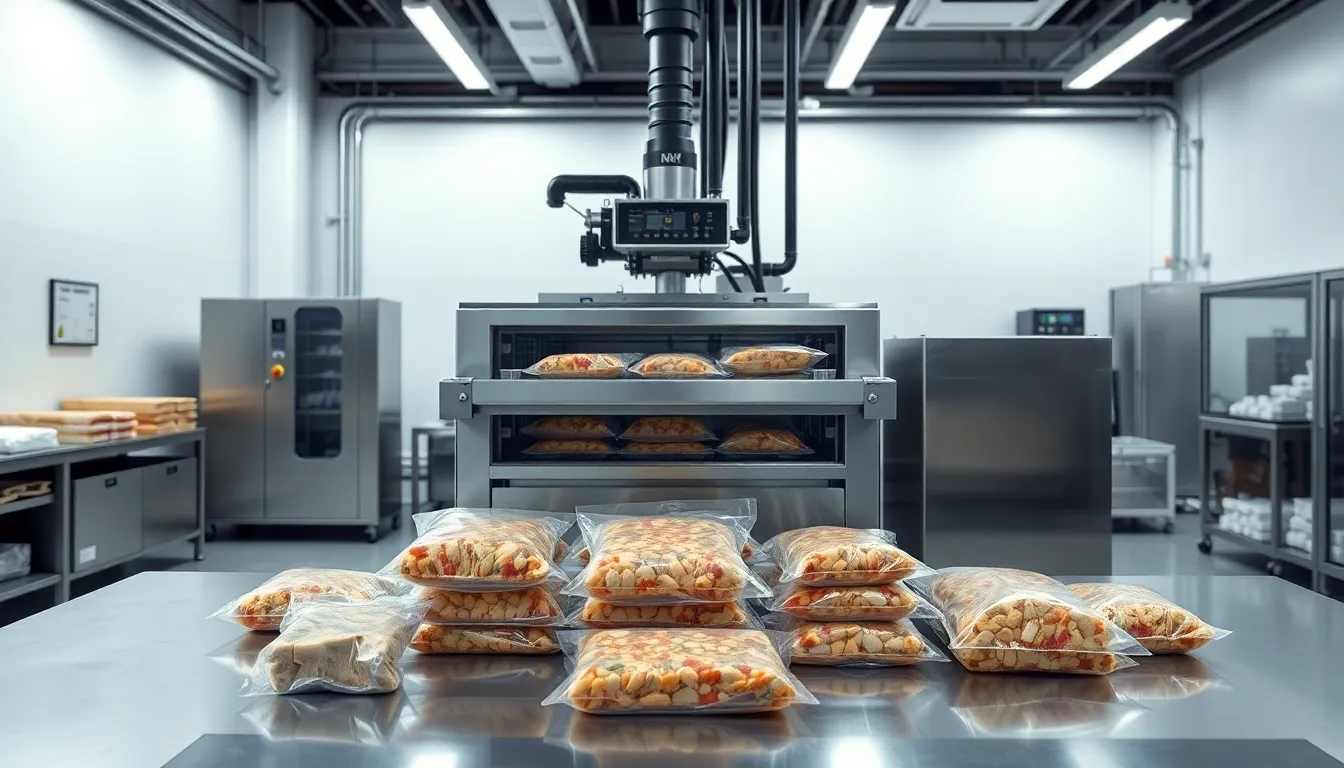
A heavy duty vacuum packing machine can extend usable storage time by limiting oxygen exposure and reducing contact with moisture. This slows oxidation, surface drying, and quality loss in foods such as beef, poultry, fish, cheese, vegetables, and prepared meals.
The exact result depends on the food, its freshness, the packaging material, and storage temperature. Vacuum packing does not make food shelf-stable or replace refrigeration, freezing, or safe handling. Perishable products still need prompt chilling and proper temperature control.
More predictable production planning
Longer quality retention gives commercial kitchens more control over prep schedules. Staff can portion meat, sauces, marinades, and ready-to-cook components during quieter periods instead of preparing every item during service. This supports batch preparation while keeping portions clearly separated and easy to identify.
For example, a kitchen may pack individual servings of trimmed meat or pre-portioned ingredients for several service days. Labels should include the product name, packing date, use-by date, and storage condition. That habit improves stock rotation and reduces guesswork.
Better protection for product texture and appearance
Air pockets can dry exposed surfaces and weaken delicate foods during storage. A close-fitting vacuum pouch helps maintain the shape of many solid products and limits surface changes. This is especially useful for trimmed cuts, portioned fish, hard cheese, and prepared components that must look consistent on the plate.
Heavy duty equipment also creates repeatable vacuum and sealing cycles. Consistency matters because one weak seal can expose an entire portion to air. Inspect each seal for wrinkles, trapped food, moisture, or incomplete bonding before moving the pack to cold storage.
Important food-safety limits
Vacuum packing lowers oxygen inside the pouch, but it does not remove all food-safety risks. Certain bacteria can grow in low-oxygen conditions if food is held too warm or too long. Keep chilled products at a safe refrigerator temperature, freeze items that will not be used soon, and follow local food-code rules and validated shelf-life procedures.
Use clean equipment, fresh packaging, and suitable pouches. Never vacuum-pack food that already shows spoilage. When a business wants to extend a documented shelf life, base the decision on a hazard analysis, product testing, and advice from its local food-safety authority.
Lower Food Waste and Better Inventory Control
A heavy duty vacuum packing machine helps kitchens control stock at the portion level. Instead of storing one large opened pack, staff can divide meat, sauces, cheese, or prepared components into measured units. Each unit becomes easier to count, date, move, and use.
This turns waste control into a simple routine. When portions are visible and clearly labeled, teams can see what is available before opening new supplies. That reduces duplicate preparation, forgotten leftovers, and unnecessary overproduction.
Portion control also protects purchasing decisions. Managers can compare packed portions with sales records and adjust orders with greater accuracy. If a dish repeatedly leaves unused components, the data may support smaller prep batches or a revised menu quantity. Small corrections add up over a busy week.
- Record the number of portions packed.
- Mark the product, weight, packing date, and planned use date.
- Store similar items together by product type or service day.
- Use older approved stock before newer stock.
- Log damaged packs, spills, and unused portions.
Heavy duty equipment is useful because it supports consistent pack sizes during repeated production. A standardized pouch filled to a fixed weight makes stock counts faster and reduces uneven portions that often lead to leftovers. It also helps kitchens forecast how many servings their current inventory can produce.
There is a financial benefit, too. Less discarded food means fewer lost ingredient costs, while better stock visibility can reduce emergency purchases, rush deliveries, and staff time spent searching through crowded storage.
Treat every packed unit as an inventory record, not just a sealed bag. Use a simple spreadsheet, label printer, or stock system to connect packed quantities with purchasing and production figures. That discipline turns vacuum packing into a practical waste-reduction tool.
Key Benefits and Considerations of Heavy Duty Vacuum Packing Machines
| Aspect | Advantages | Considerations |
|---|---|---|
| Shelf life | Limits oxygen exposure, surface drying, and moisture loss in meat, fish, cheese, vegetables, and prepared foods. | Does not make perishable food shelf-stable; refrigeration, freezing, and safe handling are still required. |
| Food quality | Helps protect texture, appearance, shape, and cooking juices during storage and transport. | Suitable pouches and careful handling are necessary to prevent punctures and leaks. |
| Food waste | Portion-sized packs improve stock visibility, reduce overproduction, and support accurate inventory control. | Products must be labeled, dated, rotated, and monitored systematically. |
| Freezer storage | Reduces air space around food and helps limit freezer burn and moisture loss. | Freezer-safe, puncture-resistant packaging must be used, especially with bones or sharp edges. |
| Production efficiency | Repeatable cycles support batch preparation, standardized portions, and higher daily output. | Actual productivity depends on loading, filling, labeling, staffing, and cleaning time. |
| Commercial durability | Heavy duty components are designed for frequent cycles and consistent sealing performance. | Purchase price, maintenance, spare parts, and service costs are higher than for domestic models. |
| Storage space | Flat, compact pouches stack efficiently and can reduce clutter in refrigerators and freezers. | Machines require dedicated floor space, lid clearance, and an appropriate electrical supply. |
| Sous vide preparation | Creates close-fitting packs that support even heat transfer and consistent portion control. | Validated cooking, chilling, storage, and reheating procedures remain essential for food safety. |
Protection Against Freezer Burn and Moisture Loss
Freezer burn begins when moisture leaves exposed food and turns into ice crystals on the surface. The result is often a pale, dry patch with a tough texture. A strong vacuum pack limits the air space around the product, while the pouch acts as a close barrier against moisture movement.
This is especially useful for foods stored for weeks or months. Meat portions, fish, bread, fruit, vegetables, and prepared meals can retain a more even surface instead of developing dry edges or brittle spots. The food may still lose quality over time, but the sealed pack slows the process.
Packaging choice matters. Use pouches made for freezing, with enough thickness and puncture resistance for the product. Thin material may split around bones, sharp corners, or frozen edges. Leave a suitable margin above the food so the seal remains clean and fully bonded.
- Chill or freeze the product promptly after packing.
- Remove sharp bones or cover them with protective material.
- Keep the sealing area free from grease, liquid, and food particles.
- Flatten packs where practical to support fast, even freezing.
- Store sealed portions away from rough surfaces that may cause punctures.
Flat packs offer a useful secondary benefit: they stack neatly and expose less surface area to warm air when the freezer door opens. That can make storage more orderly and reduce handling that damages ordinary wrapping. A compact pack may be less glamorous than a messy one, but it earns its keep.
Check frozen packs from time to time. Frost inside the pouch, a loose seal, or visible air returning after packing may indicate a leak. Move affected food to a new approved pouch and inspect the machine’s sealing bar and operating settings before continuing production.
Stronger Seals for Demanding Commercial Work
Heavy duty vacuum packing machines are built to create dependable seals during repeated commercial use. This matters when packs move through refrigeration, transport, storage, and service with little room for failure. A sealed pouch is only useful when the seal remains intact.
Seal strength comes from several parts working together: stable heat, correct dwell time, even pressure, and a clean sealing surface. Commercial machines usually provide stronger control over these variables than light domestic units. That consistency helps produce uniform seams across a long production run.
A robust seal also improves handling. Staff can lift, stack, sort, or transport pouches with less risk of the opening peeling apart. This is valuable for products with liquid marinades, dense portions, or rough edges that place extra stress on the packaging.
- Choose a sealing bar that suits the pouch width and daily workload.
- Keep the seal zone flat and free from oil, liquid, and food residue.
- Match heat and sealing time to the pouch material.
- Allow the seam to cool before applying heavy pressure or stacking.
- Inspect the full seal, not only its centre point.
Heavy duty construction brings another advantage: less interruption. Reinforced lids, durable sealing bars, serviceable pumps, and replaceable wear parts can support demanding schedules better than fragile components. The machine need not be fancy; it needs to behave the same way on the hundredth cycle as it did on the first.
For operations packing wet or oily products, a chamber design can be particularly practical because the pouch is sealed inside the chamber rather than relying only on external suction. The best choice still depends on pouch type, product size, liquid content, and expected cycles per day.
Train operators to treat seal inspection as a quality-control step. A simple visual check, plus occasional pressure or leak testing under the site’s procedure, can identify problems before a weak pack reaches storage or delivery.
Faster Packing and Higher Daily Output
A heavy duty vacuum packing machine increases daily output by turning packing into a repeatable production line. Operators can load one pouch while another is being prepared instead of stopping to complete every task from start to finish. The gain comes from smoother movement between filling, loading, sealing, labeling, and storage.
For high-volume kitchens, cycle time is only part of the picture. The machine must also recover quickly, accept frequent loading, and avoid unnecessary pauses. A commercial unit with a suitable chamber size lets staff process several compatible portions in one cycle, which can raise throughput without adding another full-time operator.
Double-chamber equipment can improve the rhythm further. While one chamber runs, the operator can arrange the next group of pouches in the other chamber. This removes much of the waiting between cycles and can create a substantial capacity gain over several hours.
- Prepare pouches, labels, and product portions before switching on the machine.
- Group items with similar cycle requirements.
- Use the chamber space efficiently without blocking the lid or seal area.
- Assign loading and unloading roles during peak production.
- Track completed cycles and packed units per hour.
Output improves most when the machine matches the workload. A compact tabletop unit may suit a café or small prep room, while a larger chamber or dual-chamber model is better for central kitchens, meat processors, and catering operations. Buying the largest machine is not automatically wise; unused capacity still costs money, floor space, and power.
Workflow design matters as much as pump performance. Place the machine near portioning and cold storage, keep packaging supplies within reach, and leave enough clearance for safe lid movement. When staff do not need to cross the kitchen for every pouch, the process becomes faster and less tiring.
Measure real performance over a normal shift. Compare planned output with completed packs, note stoppages, and include cleaning and changeover time. Those figures reveal whether the bottleneck is the machine, pouch preparation, staffing, or product handling. The investment decision can then rest on operating data rather than brochure numbers.
Why Double-Chamber Machines Improve Workflow
A double-chamber machine separates the sealing area into two working spaces. This lets an operator load one side while the other completes its cycle, creating a more continuous rhythm during production. The benefit is not only speed; it is fewer idle moments and less stop-and-start movement.
That layout can simplify teamwork. One person can fill and arrange pouches, while another closes the lid, removes finished packs, and prepares the next load. Because the workstations remain close together, handoffs are quicker and easier to monitor.
Two chambers also support clearer task planning. A kitchen can assign one chamber to a particular pouch size or product group during a run. This reduces repeated adjustments and helps operators follow a fixed sequence that is easier to teach, supervise, and improve.
- Keep a prepared load ready beside the machine.
- Use separate trays for filled pouches and finished packs.
- Assign chamber use before a production run begins.
- Record delays caused by filling, loading, or unloading.
- Schedule cleaning between product groups when required.
For a central kitchen or processor, the two-chamber design can reduce congestion around the packing station. Finished units leave through one route, while empty packaging and prepared product enter through another. This separation lowers the chance of mixed batches and misplaced items.
The design is particularly useful when products vary in size but share similar packing steps. Operators can prepare the next load during the active cycle instead of waiting beside the lid. The work becomes less like a queue and more like a compact assembly line.
A double-chamber unit needs more floor space, and its purchase, cleaning, and service costs may be higher. It earns its place when the operation has enough volume to keep both chambers productively occupied. For occasional packing, a single chamber may remain the saner choice.
Better Storage Space and Lower Operating Costs
A heavy duty vacuum packing machine can reduce storage pressure by removing bulky air from each pouch. Flat packs fit more neatly in drawers, racks, and freezers than loose containers or irregular wrapping. The result is not simply a tidier room; it can delay the need for extra shelving or a larger cold-storage unit.
Standard pack shapes also make space easier to plan. Staff can stack similar portions by size, product group, or destination. This creates clearer aisles and fewer unstable piles. In a busy operation, every search, restack, and rehandle uses labor.
Operating savings come from more than electricity. Consider the full cost of ownership:
- Less storage space required for the same usable volume.
- Lower spending on disposable wraps, trays, and secondary containers.
- Fewer labor minutes spent sorting irregular packages.
- Reduced product damage during routine handling.
- More predictable use of refrigeration and freezer capacity.
Energy savings should be treated with care. The sealer itself uses power, and larger pumps may draw more during operation. The financial case becomes stronger when compact packs improve freezer loading, reduce the number of open containers, and help staff use existing cold storage more effectively. Measure actual consumption rather than relying on a broad claim.
Maintenance has a direct effect on cost. Clean the chamber, lid gasket, sealing bar, and filter according to the manufacturer’s schedule. Replace worn gaskets and pump oil when required. A small service task is usually cheaper than a failed cycle, damaged packaging, or an emergency repair during production.
Before buying, compare the machine’s price with measurable site costs: storage rent, packaging use, labor time, service intervals, and expected cycles per day. A machine priced near $1,000 may suit light commercial work, while equipment costing several thousand dollars needs a much higher workload to justify the investment. The smartest purchase lowers total cost without leaving expensive capacity idle.
Safe Preparation for Sous Vide Cooking
A heavy duty vacuum packing machine supports sous vide by creating a sealed, controlled cooking environment. The pouch keeps food in close contact with the heated water, so heat moves more evenly around the portion. Seasonings and cooking juices also stay with the food instead of escaping into the bath.
The machine is not the safety control. Safe sous vide work depends on the full process: fresh ingredients, clean handling, an approved pouch, a validated time-and-temperature combination, rapid chilling when food is prepared ahead, and cold storage at the required temperature.
Use pouches designed for the intended cooking temperature and duration. Ordinary storage bags may soften, split, or release unwanted substances when heated. Check the packaging specification, avoid overfilling, and leave enough open area for a complete seal.
- Keep raw and cooked products separated during preparation.
- Use a separate pouch for each portion or validated batch size.
- Remove trapped air without crushing delicate ingredients.
- Keep pouches fully submerged during cooking.
- Chill cooked packs rapidly when they are not served at once.
- Reheat chilled portions under a documented kitchen procedure.
Consistent pouch shape can improve water circulation. A flat portion heats more predictably than a thick, folded bag with large air pockets. This helps kitchens repeat a recipe with less variation between portions, particularly when several packs enter the bath together.
Commercial production also benefits from clear traceability. Record the product, batch, packing time, cooking method, cooling step, and final destination. If a process changes, the kitchen can identify which packs were affected instead of treating the entire day’s output as one mystery batch.
Pay special attention to low-temperature cooking, vacuum-packed seafood, poultry, and chilled foods held for later service. These products need validated controls because low oxygen and extended time can create serious hazards. Follow local food regulations and guidance from qualified food-safety professionals; a vacuum seal alone is never a guarantee of safe food.
Greater Product Quality During Transport and Storage
A heavy duty vacuum packing machine helps preserve product quality while food moves between kitchens, cold rooms, delivery vehicles, and service sites. By holding portions tightly inside a sealed pouch, it limits shifting, rubbing, and exposure to handling during transport.
This protection is valuable for delicate products. Prepared meals, trimmed cuts, seafood, sliced items, and soft components can arrive with a cleaner appearance and fewer crushed edges. The pouch also keeps juices and marinades contained, which helps protect nearby packages and transport surfaces.
Consistent packaging improves handover control. A sealed unit is easier to identify, count, and assign to a customer, branch, event, or production batch. Labels remain attached to a defined portion rather than to an open container that may be divided several times. That supports clearer traceability from the packing station to final use.
- Use pouches with enough puncture resistance for the product.
- Place sharp or hard components away from vulnerable pouch areas.
- Choose a pack size that prevents excessive movement inside the bag.
- Use secondary crates when deliveries involve stacking or vibration.
- Keep chilled products within the required transport temperature range.
Vacuum packing can also improve presentation at the point of use. Staff can open one measured pack when needed instead of exposing a larger batch to repeated contact. For catering and multi-site operations, that reduces handling and helps each location receive portions with a more uniform appearance.
Transport protection is not the same as impact protection. A vacuum pouch can still tear if it is dragged across rough surfaces or packed beside sharp equipment. Use clean containers, stable stacking, and suitable insulation. The pouch is one layer in the distribution system, not a magic shield.
For products sent through several hands, use a clear identification system. Include the item name, batch or lot code, packing date, destination, storage requirement, and approved use date. When quality concerns arise, this information makes a targeted check possible instead of forcing a broad product hold.
Choosing the Right Machine Capacity and Price
Choosing the right machine starts with workload, not the lowest sticker price. Count the packs expected on a normal day, then check the largest pouch, product, and liquid load the machine must handle. A unit that fits today’s demand but struggles during peak service can become an expensive bottleneck.
Match capacity to real production data. A small commercial chamber machine may suit a café or low-volume prep room. Larger kitchens may need wider sealing bars, deeper chambers, or a double-chamber design. The listed commercial market spans roughly $989.99 for an entry-level chamber unit to more than $12,000 for high-capacity equipment. Those figures show why workload and machine class should be assessed together.
- Measure the widest pouch used in daily production.
- Record the heaviest and tallest product placed inside the chamber.
- Estimate normal cycles per day, including busy periods.
- Check available electrical supply before ordering.
- Confirm floor space, lid clearance, and machine weight.
- Price service, pump oil, gaskets, sealing elements, and spare parts.
Do not compare prices without checking what the figure includes. A lower purchase price may exclude shipping, installation, electrical work, packaging trials, or routine service. A higher-priced unit may offer stronger construction, wider sealing capacity, easier maintenance, or better access to replacement parts. The useful comparison is the total cost over several years, not one line on a quotation.
Power supply deserves special attention for larger machines. Some models are available in single-phase and three-phase versions, but the correct choice depends on the building’s electrical system and local installation rules. Ask a qualified electrician to verify voltage, amperage, plug type, and circuit capacity before the machine arrives.
Capacity should also reflect product diversity. If the operation packs small portions most of the time but occasionally handles large cuts, check whether the chamber can support both without excessive unused space. A machine that is too large may waste energy and work area; one that is too small may force awkward loading and extra cycles.
Use a simple payback calculation before committing:
Estimated payback period = total installed cost ÷ expected monthly savings and added contribution margin.
Include labor savings, avoided packaging waste, additional saleable output, service costs, and financing charges. Treat estimated savings as a range rather than a promise. That approach makes the purchase decision more honest and useful.
Fazit: Select a Heavy Duty Vacuum Packer That Fits Your Workload
The right heavy duty vacuum packer is the one that fits the actual production pattern, not necessarily the one with the biggest pump or longest feature list. A sound decision links machine capacity, pouch format, electrical supply, service access, and expected use over several years.
Use collected operating figures to create a short specification before requesting quotes. Include peak daily packs, maximum product dimensions, liquid content, available floor space, and required power. This prevents a common mistake: choosing a machine by price first, then discovering that it cannot support the work that matters most.
- Low or moderate volume: consider a compact chamber unit with simple controls and accessible replacement parts.
- Regular commercial production: prioritize cycle consistency, suitable chamber dimensions, and a sealing system matched to your pouch material.
- Heavy daily demand: assess dual-chamber equipment, service response times, and the availability of trained maintenance support.
- Specialized products: confirm compatibility with liquids, sharp-edged foods, large portions, and the required storage or cooking process.
Request written quotations that separate the machine, delivery, installation, training, warranty, consumables, and service terms. Compare the same assumptions across suppliers. Ask who handles repairs, how quickly critical parts can be supplied, and whether routine maintenance must be performed by an authorized technician.
Before approval, run a practical trial with your own products and pouches. Measure loading time, cycle time, seal quality, operator effort, and the number of packs completed in a normal hour. A short trial often reveals more than a specification sheet, especially when products contain liquid or vary in shape.
Finally, define success before purchase. Useful targets may include fewer packaging failures, a lower cost per packed unit, shorter preparation time, or better use of existing cold-storage space. Review those measures after installation. If the machine meets the targets without creating new bottlenecks, it is doing its job.
Buy for the workload you can document, the products you actually pack, and the support your operation can access. That approach turns a heavy duty vacuum packer from a large equipment expense into a controlled production investment.
Frequently Asked Questions About Heavy Duty Vacuum Packing Machines
What are the main advantages of using a heavy duty vacuum packing machine?
A heavy duty vacuum packing machine can support longer product quality retention, reduce food waste, improve portion control, protect food from freezer burn, and increase packing efficiency. Commercial models are designed for frequent cycles and consistent sealing in professional kitchens and food-processing operations.
Can vacuum packing extend the shelf life of perishable food?
Vacuum packing limits oxygen exposure and can slow oxidation, surface drying, and moisture loss. However, it does not make perishable food shelf-stable. Refrigeration, freezing, proper hygiene, safe handling, and validated storage procedures remain essential.
How does a heavy duty vacuum packer help reduce food waste?
It allows kitchens to divide ingredients, meat, sauces, and prepared foods into clearly labeled portions. This improves stock visibility, supports first-in-first-out rotation, reduces overproduction, and helps staff use existing inventory before opening or preparing additional supplies.
Are heavy duty vacuum packing machines suitable for sous vide cooking?
Yes, they can create close-fitting packs that support consistent heat transfer during sous vide cooking. The pouches must be suitable for the required temperature and duration, and the kitchen must follow validated cooking, chilling, storage, and reheating procedures.
What should businesses consider before buying a heavy duty vacuum packing machine?
Businesses should compare daily pack volume, chamber and sealing-bar dimensions, pouch compatibility, product size, liquid content, electrical requirements, available floor space, maintenance needs, spare-parts access, and total ownership cost. A practical trial with the intended products can help confirm whether the machine matches the workload.