
Table of Contents:
Built for Heavy Loads and Strong Stacking
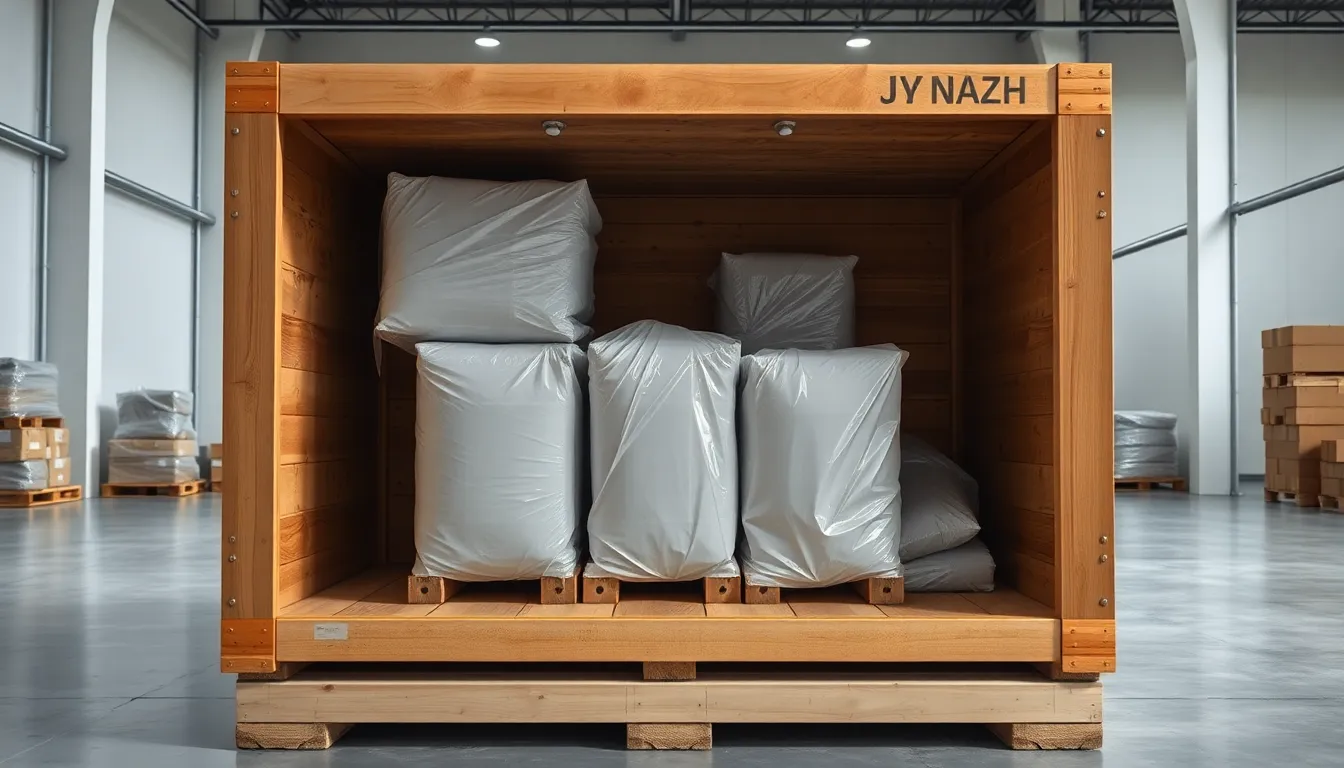
Heavy-duty wooden packaging boxes earn their place when cargo is heavy, tall, or difficult to stabilize. A well-built crate spreads load across its base and side panels instead of leaving one weak point to carry the strain. That matters during forklift movement, truck vibration, and repeated handling.
The SharkCrate 96 × 48 × 54 model has a rated load capacity of 1,800 lb. Its stated stacking capacity reaches 17,000 lb, giving warehouses a useful safety margin when packed crates are stored vertically. These figures are not permission to overload the box: the floor, pallet condition, center of gravity, and stacking surface still require checking before shipment.
For safer stacking, keep the heaviest mass low and centered. Do not place a crate with a bowed base beneath another unit, and avoid uneven floors that can twist the structure. Inspect the base, confirm that the load is restrained, and verify the marked weight before dispatch.
Rigid OSB Panels and Steel Corner Supports
A rigid panel does more than form a wall. It helps keep the crate’s shape when pressure, vibration, or uneven contact acts on the load. In the SharkCrate example, 19/32-inch (15 mm) OSB panels provide a firm enclosure for large cargo and help limit flex during normal handling.
The 0.040-inch (1.0 mm) steel corner supports reinforce the areas where panels meet. These junctions often face concentrated stress: a strap may pull across an edge, a forklift may cause a brief jolt, or a neighboring package may press against one corner. Steel reinforcement distributes that force instead of allowing the panel edge to carry it alone.
OSB offers a practical balance between stiffness and material efficiency. Its layered wood strands create a broad, consistent sheet rather than relying on a few solid boards with natural weak spots. The material is not waterproof, however. Cargo exposed to rain, condensation, or high humidity needs an inner moisture barrier and suitable desiccant protection.
- Inspect panel faces for cracks, swelling, or loose sections before loading.
- Keep sharp metal edges away from the OSB or add protective separators.
- Use internal blocking so the cargo cannot strike the walls during transit.
- Do not drill new holes near corners without checking the structural layout.
This combination works best when the crate walls, internal restraints, and load plan act as one system. Strong panels help contain the shipment; careful packing keeps that strength from being tested unnecessarily.
Key Benefits and Considerations of Heavy-Duty Wooden Packaging Boxes
| Feature | Benefit | Important Consideration |
|---|---|---|
| High load capacity | Supports heavy machinery, equipment, and oversized cargo during transport and storage. | Check the crate rating, floor condition, center of gravity, and total shipment weight before loading. |
| Strong OSB panels | Provides a rigid enclosure that helps resist pressure, vibration, and impact during handling. | OSB is not waterproof, so moisture barriers and desiccants may be required. |
| Steel corner supports | Reinforces panel junctions and distributes stress across vulnerable corners. | Inspect supports and panel edges for damage before every reuse. |
| Four-way pallet base | Allows forklift or pallet-jack access from all sides and simplifies warehouse handling. | Insert forks fully, lift smoothly, and confirm that floors and equipment can support the load. |
| Secure closures | Steel strapping or screws help keep the lid in place and reduce unauthorized access. | Use edge protectors for straps and verify that the lid closes evenly without gaps. |
| Foldable construction | Reduces storage space when empty and supports repeated return-transport cycles. | Inspect hinges, joints, fastener holes, and panels after each trip. |
| ISPM-15 certification | Supports international shipping by reducing the risk of transporting wood-borne pests. | Confirm that applicable components carry a legible IPPC mark and HT treatment code. |
| Reusable design | Can support shipping, warehouse storage, inter-site transfers, trade shows, and returns. | Retire the crate if joints loosen, panels split, or the base shows structural damage. |
Four-Way Pallet Base for Safer Handling
A four-way pallet base lets forklift tines or pallet-jack forks enter from any side. That flexibility can simplify dock work, especially when a crate arrives in a tight staging area or must be turned without manual repositioning. Fewer forced approaches mean less awkward handling around the cargo.
The pallet base also creates clearance beneath the load. This gap helps forks engage the crate cleanly and reduces the chance of striking the lower panels. Before lifting, center the forks, insert them fully, and keep the mast stable. A partial entry can shift weight suddenly—never a fun surprise with a large crate.
- Check that the forks extend far enough beneath the pallet base.
- Lift smoothly, then pause briefly to confirm balance.
- Keep people clear of the travel path and suspended load.
- Use ramps, dock plates, and floors rated for the combined shipment weight.
- Do not drag the crate across the floor or push it with a forklift.
Because the base supports both access and positioning, treat it as part of the handling plan rather than merely as a platform. Confirm equipment limits and site procedures before moving an oversized crate through doors, trailers, or storage aisles.
Secure Closures for Protected Shipments
A secure closure keeps the lid seated and helps prevent accidental access during transport. For the SharkCrate design, the lid can be fixed with steel strapping or screws. The best choice depends on how often the crate will be opened, the shipment route, and the tools available at the loading site.
Steel strapping suits shipments that need a firm external seal with quick removal at the destination. Use edge protectors beneath the strap so tension does not cut into the wood. Screws offer a more permanent fastening method and can reduce lid movement, but they require controlled installation and safe removal equipment.
- Close every intended fastening point; do not rely on one strap or a few screws.
- Keep fasteners clear of the cargo and any lifting equipment.
- Mark the closure method so receiving staff know how to open the crate safely.
- Apply a tamper-evident label when access control matters.
- Photograph the sealed crate and record its condition before dispatch.
Closure hardware protects the package only when the lid meets the crate evenly. Check for gaps, loose edges, and strap slack before release. If the cargo can shift inside, add blocking or cushioning first; a tight lid cannot compensate for movement within the enclosure.
Foldable Design for Reuse and Lower Storage Space
A collapsible wooden crate can reduce the space needed between shipments. When empty, its panels fold down instead of leaving a full-size enclosure occupying valuable warehouse volume. That makes the format useful for companies that send equipment out, receive it back, and store the packaging in the meantime.
Reuse can improve the packaging cycle for return transport, inter-branch transfers, exhibitions, or temporary storage, provided the structure remains sound after each use. The practical gain is not simply fewer new boxes. It is a smoother asset loop: deploy, return, inspect, fold, and store.
- Remove dirt, labels, and loose debris before folding the crate.
- Inspect hinges, joints, fastener holes, and panel edges after every trip.
- Store folded sections on a dry, level surface away from standing water.
- Keep the folded bundle secured so it cannot topple in a storage aisle.
- Record repair needs before the next packing cycle, not at dispatch time.
Staff should follow the manufacturer’s assembly method and use enough people or suitable equipment for large panels. A quick, careless fold can damage edges or create a safety hazard. Retire the crate when joints loosen, panels split, the base is damaged, or previous handling has left hidden structural concerns.
ISPM-15 Certification for International Shipping
ISPM-15 certification addresses a specific international-shipping risk: untreated wood can carry insects, larvae, or fungi into new regions. The standard applies to solid wood packaging material, including pallets, crates, dunnage, and skids. Approved treatment reduces this biological risk before the package enters the export chain.
The marked wood must show the official IPPC symbol, the country code, the producer or treatment-provider code, and the treatment code. The HT code means heat treatment. Under ISPM-15, wood is heated until its core reaches at least 56°C for 30 continuous minutes. The mark is the key evidence used during inspection; a seller’s general claim alone is not enough.
- Check that every applicable wooden component carries a clear, legible IPPC mark.
- Confirm the destination country’s import rules before booking transport.
- Keep replacement wood, loose braces, and added dunnage compliant as well.
- Do not paint over, remove, or cover the treatment mark.
- Ask the carrier whether damaged packaging must be repaired with approved material.
ISPM-15 does not certify the crate’s strength, water resistance, or cargo restraint. It covers pest-control treatment and marking. Secure export packaging therefore requires separate checks for biological compliance and the physical packing plan.
Example: Protecting Large Equipment in Transit
Consider a large industrial control cabinet moving from a factory to a remote service site. The equipment may be costly, top-heavy, and sensitive to impact. A heavy-duty wooden crate gives the shipment a defined outer boundary while leaving room for a planned internal support system.
For example, the 96 × 48 × 54-inch SharkCrate provides an internal space of 94.5 × 46.5 × 48 inches. That difference between outer and inner dimensions is important: the available clearance must cover the equipment, cushioning, blocking, and any moisture protection. Measure the packed unit, not only the bare machine.
A dependable packing sequence looks like this:
- Clean and inspect the equipment before placing it inside.
- Protect displays, connectors, painted surfaces, and exposed shafts with suitable covers.
- Fix the equipment to a base or blocking system so it cannot slide or tip.
- Leave serviceable clearance around fragile controls and protruding parts.
- Add shock-absorbing material where vibration could cause fatigue or abrasion.
- Place a packing list, handling instructions, and orientation marks in visible locations.
After closure, compare the packed weight with the transport documents and confirm that the center of gravity is clear to the handler. For equipment with a high value or delicate electronics, add a shock or tilt indicator. These devices do not prevent damage, but they create a useful record when the crate reaches its destination looking fine—yet the machine does not.
The crate is only one part of the protection plan. The result comes from matching the enclosure, internal restraint, moisture control, and handling instructions to the equipment’s actual failure points.
Best Uses for Shipping, Storage, and Return Transport
Heavy-duty wooden packaging boxes are most useful when one package must serve several stages of a product’s journey. A single crate can support outbound delivery, controlled storage, and a later return without forcing the shipper to redesign the packing method each time.
For factory-to-customer shipping, the crate suits machinery, spare assemblies, instruments, and oversized components that need a defined package footprint. Add a clear packing list and destination details before dispatch. If the shipment changes hands often, include handling marks that state the correct orientation and lifting points.
During warehouse storage, the enclosure can protect packed goods from accidental contact, dust, and routine aisle traffic. Storage teams should record the crate ID, contents, date packed, and inspection status. This prevents an old package from becoming a mystery box months later.
For return transport, plan the second journey before the first one begins. Leave instructions inside the lid, retain the original blocking materials where possible, and define who checks the crate after unloading. A return workflow works best when the receiver knows exactly what to keep, what to replace, and what damage to report.
- Shipping: use for valuable, oversized, or awkwardly shaped items moving through several logistics hubs.
- Inter-site transfers: standardize the package for recurring movements between plants, depots, or service centers.
- Trade shows: protect display hardware while allowing a predictable pack-up process after the event.
- Storage: use the closed crate as a controlled unit for equipment awaiting installation or repair.
- Returns: create a documented loop for loan equipment, repair units, and reusable transport assets.
Reuse does not mean indefinite reuse. Retire the crate when joints loosen, panels split, the base is damaged, or previous handling has left hidden structural concerns. The right application is defined by the cargo, the number of handling cycles, and the quality of each inspection.
Fazit: Choose the Right Heavy-Duty Wooden Box for Secure Packaging
The right heavy-duty wooden box is not chosen by size or price alone. Match the crate to the cargo’s measured dimensions, weight, center of gravity, handling route, and expected number of trips. This avoids two common failures: a box that restricts protective packing, or one so large that the contents can move inside it.
Before ordering, confirm four practical points: the usable internal space, the access needed during loading, the transport equipment available at each location, and the rules that apply to the destination. Also request current manufacturer specifications, because ratings and approved uses can vary between crate designs and production runs.
- Measure the complete packed load: include cushioning, barriers, cables, handles, and protrusions.
- Define the handling route: check doors, elevators, vehicle decks, ramps, and storage limits.
- Set a damage-control plan: identify moisture, shock, vibration, and tampering risks before packing.
- Document the package: retain the specification sheet, packing record, photographs, and inspection notes.
- Choose for the full life cycle: compare purchase, storage, return, repair, and disposal needs—not just the first shipment.
A heavy-duty wooden box becomes an ideal secure-packaging choice when its design fits the shipment rather than forcing the shipment to fit the box. Careful selection, accurate records, and a realistic handling plan turn a strong enclosure into dependable protection. Treat the crate as part of the logistics system, not as an afterthought.
Frequently Asked Questions About Heavy-Duty Wooden Packaging Boxes
Why are heavy-duty wooden packaging boxes suitable for secure shipping?
Heavy-duty wooden packaging boxes provide a rigid enclosure for heavy, oversized, or delicate cargo. Strong OSB panels, reinforced corners, internal blocking, and secure closures help protect shipments against vibration, impact, and movement during handling and transport.
How much weight can a heavy-duty wooden crate support?
Capacity depends on the specific crate design and packing conditions. For example, the SharkCrate 96 × 48 × 54 model has a rated load capacity of 1,800 lb and a stated stacking capacity of 17,000 lb. The floor condition, center of gravity, pallet condition, and total shipment weight must also be checked.
Are wooden shipping crates suitable for international transport?
Yes, wooden crates with valid ISPM-15 certification can support international shipping by reducing the risk of transporting wood-borne pests. The applicable wooden components should carry a legible IPPC mark and treatment code, and destination-country import requirements should be confirmed before dispatch.
Can collapsible wooden crates be reused?
Yes, a collapsible wooden crate can be reused for return transport, warehouse storage, inter-site transfers, and trade shows. Foldable construction saves storage space when empty, but the panels, joints, fastener holes, hinges, and pallet base should be inspected after every trip.
How should cargo be secured inside a heavy-duty wooden box?
Measure the complete packed load, place the heaviest mass low and centered, and use blocking, cushioning, and restraints to prevent sliding, tipping, and impact against the walls. Add moisture protection when needed, then fasten the lid with suitable steel strapping or screws and verify the crate before dispatch.