
Table of Contents:
How Protective Films Prevent Surface Damage
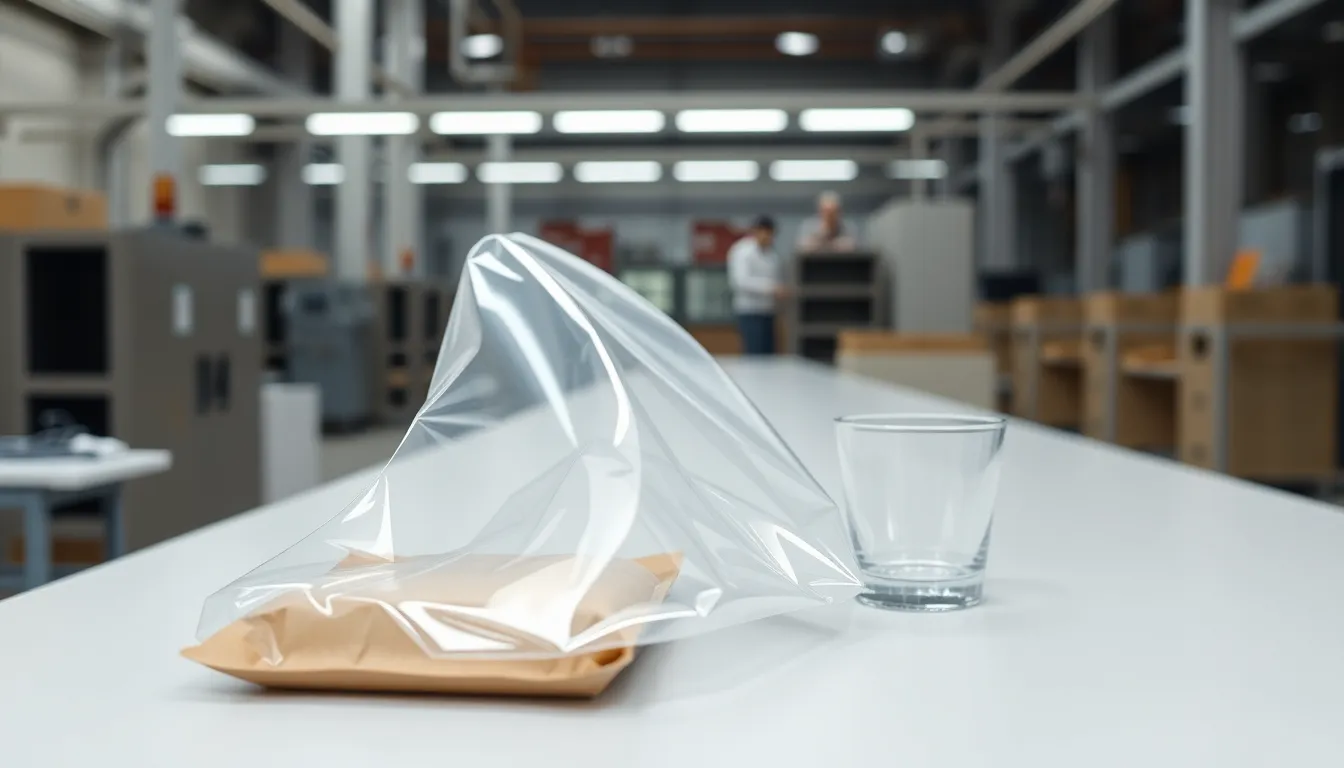
Protective films form a thin but effective buffer between a product surface and the hazards of handling, packing, storage, and transit. They help prevent scratches, scuffs, fingerprints, and abrasion when items slide against dividers, trays, tools, or one another.
The film works best when it matches the surface and the risk. A soft polyethylene film can shield painted metal or polished plastic from light rubbing. A tougher, abrasion-resistant grade may be better for glass panels or coated components that face repeated movement. The film should hold firmly without creating excessive pull during removal.
Surface damage often starts with small particles. Dust or metal fragments trapped between a product and its packaging can act like sandpaper under pressure. A properly applied film creates a clean separation layer, reducing that hidden source of marks. Clean application matters, too: poor handling can trap bubbles, particles, or wrinkles beneath the film.
Adhesive selection is equally important. Low-tack adhesives support clean removal from sensitive finishes, while stronger adhesion may be needed on textured or vertical surfaces. The adhesive must not leave residue, lift coatings, or cause discoloration during the planned storage period. Temperature, humidity, ultraviolet exposure, and contact time can all change its behavior.
For reliable protection, packaging teams should define the real damage risks before choosing a film:
- Identify whether the main threat is rubbing, impact, contamination, or cosmetic handling.
- Match film thickness, flexibility, and surface strength to the product finish.
- Check adhesion after storage at expected temperature and humidity levels.
- Test removal at the point of use, not only immediately after application.
- Inspect film edges, seams, and folded areas where lifting may begin.
Protective film cannot replace cushioning. It guards the surface, while foam, molded inserts, and corrugated structures manage movement and impact. Used together, these layers divide the job neatly: the film preserves appearance, and the package controls physical force.
That distinction is valuable for high-appearance products. A scratch on a glossy appliance panel, medical instrument, display component, or electronic housing may not affect function, yet it can still trigger rejection. Preventing that cosmetic defect at the packaging stage is usually simpler than repairing, refinishing, or replacing the item later.
Barrier Protection Against Moisture, Dust, and Chemicals
Protective films create a controlled barrier between a product and its surrounding environment. This barrier limits contact with airborne dust, water vapour, splashes, oils, and selected chemicals during storage and transport. The result is better surface cleanliness and a lower risk of contamination before the product reaches assembly, installation, or the customer.
Moisture control is especially important for metal parts. Water trapped against a surface can support corrosion, staining, or loss of finish. A film may slow direct contact with liquid water, but it is not a complete corrosion system. For long storage or ocean freight, the package may also need desiccants, vapour-control materials, and sealed outer packaging. The film is one layer in that system, not a magic shield.
Dust protection works through simple separation. Once applied, the film covers exposed faces and reduces the area where particles can settle. This is useful for polished panels, optical surfaces, painted components, and cleanroom-related items. The film should remain intact at corners and around openings; a small exposed strip can become the entry point for dirt.
Chemical resistance requires more care. Cleaning agents, plasticisers, oils, solvents, and adhesive residues can react with either the film or the product finish. A film that performs well against water may soften in contact with alcohol, hydrocarbons, or alkaline cleaners. Suppliers should therefore provide compatibility data, while packaging teams should run a small trial on the actual substrate.
- Define the contaminant: condensation, salt spray, oil, dust, or a cleaning chemical.
- Specify the expected exposure time and temperature range.
- Check whether the film allows moisture vapour to pass through.
- Test the product surface after exposure, storage, and film removal.
- Use edge sealing or a secondary barrier when the shipment faces severe humidity.
Film selection should follow the full route, not only the packing line. A dry warehouse, a humid port, and an air-conditioned customer site create different conditions. For example, a shipment crossing warm and cold zones may experience condensation even when no liquid enters the carton. In that case, the right answer may combine a protective film with humidity control inside the package.
Packaging engineers can verify performance with practical checks such as water exposure, salt-fog screening, chemical spot tests, and accelerated ageing. These tests do not predict every field condition, but they reveal weak points early. That is where protective film earns its keep: by reducing contamination risk without adding a bulky barrier around every product.
Key Benefits and Considerations of Protective Films in Packaging
| Aspect | Benefits | Considerations |
|---|---|---|
| Surface protection | Reduces scratches, scuffs, fingerprints, and abrasion during handling and transport. | Film strength and flexibility must match the product finish and handling risks. |
| Contamination control | Helps shield surfaces from dust, oils, water splashes, and selected chemicals. | It may not replace desiccants, sealed packaging, or other moisture-control measures. |
| Material compatibility | Can be selected for glass, plastic, metal, ceramic, and coated surfaces. | Adhesive compatibility must be tested to prevent residue, discoloration, or coating damage. |
| Product visibility | Clear films allow inspection while keeping the protected surface covered. | Haze, glare, wrinkles, or trapped particles may reduce visual clarity. |
| Cost control | May reduce returns, rework, replacement freight, and cosmetic rejection. | Film, application labor, removal time, and disposal must be included in total-cost calculations. |
| Packaging integration | Works with foam inserts, corrugated structures, cases, pallets, and reusable packaging. | Film edges, tabs, and overlaps must not interfere with closures, inserts, labels, or handling equipment. |
| Removal performance | Low-tack films can support clean removal at the point of use. | Removal behavior may change with temperature, humidity, ultraviolet exposure, and storage time. |
| Reusable packaging | Replaceable film sections can protect high-contact areas while containers remain in service. | Regular inspection and replacement are necessary to prevent contamination and loss of adhesion. |
Choosing Films for Glass, Plastic, Metal, and Ceramic Products
Film selection must follow the product surface, finish, and handling route. Glass, plastic, metal, and ceramic materials react differently to pressure, heat, adhesive contact, and removal. One film type cannot deliver the same result across all four groups.
Glass needs a film with clear optical quality and stable contact. Flat glass panels often suit low-residue polyethylene films, while coated or display glass may require a lower-tack adhesive. Avoid films that create haze, interfere with inspection, or bond too strongly after heat exposure. For cut edges, the film should also resist tearing during handling.
Plastic surfaces require special care because additives can migrate from the substrate into the adhesive. This may cause clouding, staining, or an uneven gloss. Polyolefin films are often a practical starting point for smooth plastics, but the exact resin, texture, and mould-release agent still matter. Test both short contact and extended storage before approving a specification.
Metal may have a bare, painted, anodised, plated, or powder-coated finish. Each finish changes the required adhesion level. A film for brushed stainless steel must preserve the grain and remove without lifting coating particles. Aluminium parts may need extra attention to oxidation and alkaline residues. Surface direction, forming oil, and post-treatment should be recorded in the packaging specification.
Ceramic products are usually hard, but their glaze can be brittle or uneven. A conformable film can follow a light texture without leaving uncovered ridges. On decorative ceramics, check colour transfer, gloss change, and clean removal after kiln-fired finishes have cooled fully. Rough edges and corners also increase the chance of puncture.
- Glass: prioritise clarity, low residue, and controlled tack.
- Plastic: check additive migration, gloss change, and compatibility with the resin.
- Metal: match the film to the coating, grain, and surface treatment.
- Ceramic: evaluate texture, glaze stability, edge protection, and removal force.
Film thickness is not a simple measure of quality. A thicker layer may resist puncture, yet it can reduce flexibility on curved parts and increase material use. A thinner film may suit a smooth flat panel but fail on sharp profiles. The useful specification combines thickness with elongation, tear strength, puncture resistance, tack, and recommended application temperature.
For mixed product lines, colour coding or printed release markings can prevent the wrong film from reaching the packing station. This small control is surprisingly valuable when several substrates look similar. The final approval should include visual inspection, adhesion measurement, removal force, and a realistic storage interval for every finish in scope.
Custom Film Design for Different Product Shapes
Custom film design begins with the product geometry, not with a standard roll width. Flat panels, deep recesses, sharp corners, handles, ports, and curved housings each create different demands. A well-designed film pattern follows these features while keeping application fast and reliable.
For irregular parts, the first step is accurate dimensional data. A packaging engineer may use CAD files, physical samples, or three-dimensional scans to map the surface. The design should show where the film starts, where it ends, and which areas must remain open. That prevents unnecessary overlap around labels, connectors, vents, and assembly points.
Complex shapes often benefit from pre-cut pieces rather than one large sheet. Separate sections can fit a curved face, an edge, and a recessed area without excessive wrinkling. Perforations, relief cuts, and rounded corners help the material conform to the part. They also make removal cleaner, especially when operators need access to one zone before the rest of the film is removed.
Edge geometry deserves special attention. A narrow radius can lift a film during packing, while a sharp point can puncture it. Designers may add a small overlap, change the cut direction, or use a stronger local section. The goal is not to cover every hidden surface. It is to protect exposed areas without creating loose flaps that catch on inserts or equipment.
- Use segmented panels for deep contours and compound curves.
- Round external corners to reduce lifting and tearing.
- Keep holes clear around handles, sensors, fasteners, and connectors.
- Place seams away from visible display zones whenever possible.
- Add alignment marks when operators must position the film quickly.
- Specify removal tabs so workers do not scratch the product with tools.
Automation changes the design rules. Machine application usually needs consistent part orientation, repeatable film tension, and a defined starting edge. Manual application allows more flexibility but depends on clear work instructions. For high-volume production, a custom die-cut format can reduce trimming, handling time, and material waste. For lower volumes, digitally cut sheets may offer a more practical balance.
Reusable packaging introduces another consideration: the film pattern must support repeated loading and unloading. A permanent protective layer may be unsuitable if it collects dust or interferes with closures. In such cases, a replaceable die-cut film can protect the contact zone while the outer case remains in service.
Prototype approval should include a real operator trial. Ask whether the piece can be applied without stretching, whether it stays flat after packing, and whether removal leaves a clear surface. A design that looks perfect on a screen can be awkward on the line. Small adjustments to cut lines, tabs, or overlap often make the difference.
Protective Packaging Solutions can combine film patterns with custom foam inserts, corrugated structures, cases, and assembly services. This integrated approach helps align the film shape with the complete packaging workflow rather than treating it as an isolated component.
Protective Films in Electronics, Medical Devices, and Industrial Goods
Protective films serve different roles across electronics, medical devices, and industrial goods. The right specification depends on the product’s cleanability, inspection needs, assembly stage, and time in the supply chain. A film used on a laptop cover may not suit a diagnostic instrument or a painted machine panel.
In electronics packaging, the film can protect screens, housings, bezels, and decorative surfaces during assembly and final distribution. It may also support visual inspection by keeping a surface clear until the customer opens the package. For sensitive devices, the film itself must not create a static charge that can attract particles or affect exposed components. Antistatic or dissipative grades may be appropriate, but they should be selected with the device’s electrostatic discharge controls in mind.
Electronic products also have functional openings. Speakers, cameras, sensors, vents, charging ports, and buttons should not be blocked by an incorrectly sized piece. A clean removal path matters as well. If installers must peel away small sections during assembly, a marked tab or pre-cut zone can reduce handling time and prevent accidental contact with the active surface.
For medical devices, cleanliness and traceability often matter more than appearance alone. Films used on instrument housings, touchscreens, trays, or diagnostic equipment should support the device’s approved cleaning process. Do not assume that a film is suitable for disinfectants simply because it is suitable for water. Compatibility must be checked against the actual agent, concentration, contact time, and temperature.
Medical packaging may also require controlled presentation. The film should not hide labels, indicators, serial numbers, or inspection marks that staff need to verify. In regulated production, the packaging specification should record the film material, adhesive type, application area, removal method, and any relevant cleanliness limits. This creates a clear link between the protective layer and the device’s quality records.
For industrial goods, the main challenge is often scale. Large painted panels, machined parts, control cabinets, and vehicle components may remain covered through several operations. The film must tolerate handling equipment, stacking, vibration, and planned processing steps without becoming a loose hazard. A release tab placed outside the working zone can make removal safer on large parts.
- Electronics: consider static control, openings, display clarity, and assembly access.
- Medical devices: verify cleaning compatibility, traceability, and controlled removal.
- Industrial goods: assess large-area coverage, machine handling, storage time, and removal ergonomics.
Films can also support production flow when applied between process stages. A component may leave coating, machining, or final inspection with a temporary cover that remains in place until installation. This reduces the need for repeated cleaning before each handoff. However, the film should never hide a defect that quality staff are expected to find. Teams need a defined point at which the cover is removed for final inspection.
Protective Packaging Solutions can combine protective films with foam cushioning, custom cases, corrugated packaging, kitting, barcoding, warehousing, and dock-to-stock services. For complex medical, electronic, or industrial shipments, this can connect surface protection with the wider packaging and delivery process.
How Films Reduce Returns, Waste, and Packaging Costs
Protective films can lower total packaging cost by preventing avoidable cosmetic damage before it becomes a return. A returned product creates more than a replacement expense. It may require inspection, repacking, cleaning, reverse transport, administrative work, and disposal of damaged materials. Even when the product still works, a visible mark can reduce its resale value.
The financial effect is best measured across the full product flow. Compare the cost of film, application time, and removal with the cost of rejected units, customer claims, rework, and lost delivery capacity. A simple calculation can reveal the break-even point:
Film program cost ÷ avoided return and rework cost = required prevention rate
For example, if a packaging line spends $4,000 each month on film and labor, while one cosmetic return costs $160 to process, the program must prevent 25 comparable cases to recover that monthly expense. The real threshold may be lower when damaged goods also need replacement or expedited shipping.
Films can also reduce material use by allowing a package to be designed around the product’s real risk profile. Without a surface barrier, teams may compensate with extra tissue, larger foam layers, secondary sleeves, or oversized cartons. A properly specified film can protect the exposed finish while the rest of the package stays lean. Less empty space can improve pallet density and reduce freight volume, though this should be confirmed with actual package measurements.
Waste reduction depends on film design and operating discipline. Oversized sheets, excessive overlap, and discarded backing material can erase the expected benefit. Pre-cut formats may reduce trimming waste, while roll-fed application can suit stable high-volume production. For small batches, a simple sheet format may create less setup waste than a complex die-cut part.
- Track film consumption per packed unit.
- Record application and removal time.
- Separate cosmetic returns from impact or functional failures.
- Measure rework hours and replacement freight.
- Review carton volume before and after the film change.
- Include recycling or disposal costs in the comparison.
Avoid treating every return as proof that more film is needed. The cause may be poor stacking, unstable product placement, weak carton compression strength, or unsuitable handling equipment. Film addresses surface contact; it does not correct a package that allows the product to move freely. A short damage audit can show whether the best investment is film, a packaging insert, a process change, or a combination.
For reusable packaging, replaceable film sections can protect high-contact zones without discarding the full container. This may extend the useful life of cases, trays, and dividers. The business case should include cleaning, replacement frequency, labor, and the number of completed transport cycles.
Protective Packaging Solutions can evaluate film use alongside foam cushioning, corrugated packaging, reusable containers, kitting, and warehousing. That broader review helps identify where a thin protective layer cuts avoidable handling cost—and where it would simply add another item to the package.
Balancing Product Visibility, Branding, and Protection
Visibility, brand presentation, and surface protection must work as one packaging decision. A film that hides the product can slow inspection and weaken shelf appeal. A completely clear layer, however, may offer little space for handling guidance or brand control. The best solution depends on where the package will be opened, displayed, and used.
Clear films are useful when buyers, warehouse staff, or inspectors need to see the product without opening the package. Optical clarity should be judged under real lighting, not only in a sample room. Glare, haze, wrinkles, and trapped air can change how a finish appears. For retail displays, the film should preserve the visual impact of the item while avoiding a cheap, cloudy look.
Branding does not always require printing directly onto the film. A small logo, colour strip, or removal message can guide handling without covering important product details. Printed film may suit promotional packaging, but the ink must resist rubbing, moisture, and contact with adjacent materials. It should also remove cleanly if the film is intended only for transit.
Information hierarchy matters. A protective layer may carry:
- Application or removal instructions
- Inspection status or handling warnings
- A short brand message
- Recycling or material identification details
- A barcode or batch reference, when scanning is required
Keep critical information visible on the product or its primary label. A film graphic should support that information, not compete with it. Heavy coverage can create a practical problem: operators may leave the film in place because they cannot tell which areas need inspection. Clear windows, printed arrows, and defined peel zones can make the process more obvious.
Point-of-purchase packaging raises another question: when should the customer remove the film? A transit-only layer should have a visible tab and a clear message. A display-facing layer may remain until purchase, but it must not distort colour or make the item look unfinished. For premium goods, a neat peel experience can become part of the product presentation—small detail, noticeable result.
Packaging teams should test the final combination of film, print, carton graphics, lighting, and viewing distance. Review it at the packing station, in a warehouse aisle, and on the retail shelf. This reveals issues that isolated material samples often miss, such as glare from overhead lights or a logo disappearing against a dark product.
Protective Packaging Solutions combines custom packaging design, foam protection, corrugated structures, point-of-purchase formats, printing-related work, and assembly support. That capability helps align the film’s appearance with the complete package, from shipment protection to the moment the product is seen.
Using Protective Films in Reusable Packaging Systems
Reusable packaging works best when its protective film is treated as a service component, not a permanent accessory. The container can complete many transport cycles, while a replaceable film protects selected contact zones during each cycle. This approach suits returnable trays, cases, bins, and custom shipping containers used in electronics, medical technology, automotive parts, and industrial supply chains.
Start by mapping where contact occurs. Product edges may rub against dividers during loading, while lids or straps may touch visible panels during return transport. Applying film only to these zones keeps replacement simple and avoids covering areas that need regular inspection. A narrow sacrificial strip can often protect a high-wear edge more efficiently than a full-surface layer.
Cleaning is the key difference between single-use and reusable systems. After each cycle, operators should inspect the film for lifting, tears, trapped debris, and clouding. If the surface is damaged, contaminated, or difficult to clean, replace the film before the next load. Do not use an old film as a substitute for a clean package. That shortcut tends to cause trouble later.
- Assign a replacement trigger, such as visible damage or loss of adhesion.
- Record the number of transport cycles completed by each container.
- Keep replacement film parts identified by container model and location.
- Design peel tabs so operators can remove the layer without tools.
- Inspect film-covered areas after cleaning and before repacking.
Film placement should also support container maintenance. Avoid covering hinges, latches, drainage points, labels, and inspection marks. If a case must be washed, confirm that the film and adhesive tolerate the approved cleaning method. Some systems may need removal before washing, followed by application of a new piece after the container dries completely.
Return logistics benefit from clear visual controls. A colour mark, part code, or simple status label can show whether a protective zone is ready for use. This is particularly useful when empty containers move through several sites. Barcoding can connect the container to its inspection record, film replacement history, and next destination.
The environmental result depends on cycle count and replacement rate. A reusable case with a frequently discarded film is not automatically the best option. Compare the film mass, cleaning energy, container life, reverse transport, and disposal route across the expected number of cycles. A life-cycle review often reveals the sensible balance: durable container, small replaceable film zones, and disciplined inspection.
Protective Packaging Solutions can develop reusable packaging systems with custom foam inserts, shipping cases, corrugated components, kitting, barcoding, warehousing, and dock-to-stock services. Its design and manufacturing capabilities can help align replaceable film areas with the container’s actual wear points and operating routine.
Example: Protecting Imported Plastic Sheets During Transport
An imported plastic-sheet shipment shows why protective film must be planned for the full transport route. A representative ocean consignment to Protective Films and Packaging Solutions LLC arrived in the United States on 19 November 2025. The load contained 321 packages and weighed 14,485 kg. It moved from Travedona Monate in Italy through Genoa and New York/Newark before reaching the Illinois International Port District in Chicago.
That route exposes plastic sheets to several handling points, long dwell times, vibration, temperature changes, and possible condensation inside a container. Large flat sheets are especially vulnerable because their broad faces can rub against separators, pallets, or adjacent sheets. Their edges may also chip, bend, or catch during forklift handling. A suitable film helps maintain a clean, saleable surface while the outer packaging manages stacking and load stability.
The protection plan should begin before loading. Each sheet should be inspected, cleaned, and separated from the next surface. Film coverage must match the exposed face and remain secure at the edges. Interleaving material, corner protection, rigid separators, and a stable pallet pattern can then limit pressure and movement. The film protects the finish; these supporting elements control the shipment geometry.
For an international route, the packaging specification should also address:
- Container loading and unloading methods
- Maximum stack height and allowable compression
- Moisture control during the sea voyage
- Forklift access and pallet movement
- Identification of sheet size, grade, lot, and quantity
- Inspection points at origin, destination, and after unpacking
Documentation is not a minor detail. A packing list, photographs of the loaded pallet, film specification, and inspection record can help distinguish transport damage from manufacturing defects. Barcodes or lot labels can link each package to its shipment record and support faster receiving at the destination. For dock-to-stock operations, clear identification reduces unnecessary opening and handling.
In this example, the long multimodal journey makes a layered solution more practical than film alone. Protective Packaging Solutions can support such projects through packaging design and engineering, custom foam or corrugated components, kitting, barcoding, warehousing, and final delivery coordination. Its turn-key model connects the film choice with the complete movement of the goods.
The useful lesson is straightforward: imported plastic sheets need a packaging system designed around distance, handling, stack pressure, and climate exposure. A protective film is most effective when its role is defined within that system from the first packing operation to final receipt.
Integrating Film Solutions with Custom Packaging Services
Integrating protective films with custom packaging services turns surface protection into a controlled packaging process. The film should be specified at the same time as the insert, case, carton, label, and handling method. This prevents conflicts such as a film tab caught under foam, a label hidden by an insert, or a film edge exposed to repeated friction.
At the design stage, packaging engineers can define the complete interface between product and package. CAD data, product samples, and handling requirements help determine film coverage, insert clearances, closure pressure, and access points. The goal is a package that protects the item without forcing operators to improvise during packing.
A coordinated service can connect five practical steps:
- Product and surface assessment
- Film pattern and adhesive specification
- Custom foam, corrugated, or case design
- Assembly, kitting, and identification
- Storage, order fulfilment, and delivery control
This connection is valuable when packaging arrives as a complete kit. Pre-cut film, shaped cushioning, labels, and instructions can be grouped for each product or shipment. Operators receive the correct components together, which reduces line-side searching and helps maintain a consistent packing sequence.
Manufacturing control also improves when one packaging partner manages the handoffs. Film dimensions can be checked against the finished insert, while cushioning can be adjusted if a film tab or overlap changes the fit. Small dimensional differences matter. A few millimetres of unwanted pressure may cause lifting, while too much clearance can allow movement inside the package.
Protective Packaging Solutions offers design and engineering, custom manufacturing, kitting, assembly, barcoding, warehousing, and dock-to-stock services. Its Ohio location at 10345 South Medallion Drive in Cincinnati and its Colorado location at 14492 E. 33rd Pl. in Aurora support a turn-key model from concept through delivery. These capabilities are relevant for packaging programs that combine film with foam protection, shipping cases, reusable containers, point-of-purchase formats, or electronics packaging.
Quality checks should cover the complete assembled package, not the film alone. A useful approval process verifies application speed, component fit, closure function, label visibility, pack-out consistency, and removal at the destination. Sample shipments can then test whether the design survives normal handling and reaches the customer in the intended condition.
The main advantage of integration is accountability. Instead of asking several suppliers to solve separate pieces, the buyer can evaluate one packaging system against clear targets: surface protection, packing time, damage rate, material use, and delivery readiness. That makes the film a measured part of the solution rather than an afterthought added to an already finished package.
Fazit: Select the Right Film and Packaging Partner
The right protective film is selected by performance, not by appearance alone. Define the surface, exposure time, handling route, storage conditions, removal point, and inspection needs before comparing suppliers. Ask for documented material data, compatibility results, sample parts, and a clear replacement or complaint process.
A capable packaging partner should also understand the complete system around the film. Protective Packaging Solutions has provided custom packaging for 25 years and combines design engineering, manufacturing, assembly, kitting, barcoding, warehousing, and delivery support. This matters when film must fit with custom foam, corrugated packaging, shipping cases, reusable containers, electronics packaging, or point-of-purchase formats.
Supplier evaluation should focus on measurable outcomes:
- Stable quality across production batches
- Reliable lead times and scalable manufacturing
- Practical trials using the real product and route
- Clear documentation for material and adhesive selection
- Support for assembly, inventory, and replenishment
- Transparent pricing based on total packaging cost
Protective Packaging Solutions supports customers from concept through final delivery, with facilities in Cincinnati, Ohio, and Aurora, Colorado. Buyers can request a quote, discuss a packaging challenge by phone, or submit product files for review. This direct process is useful when a film decision affects the entire package rather than one isolated surface.
The final choice should be simple to verify: the film protects the intended surface, fits the packaging process, removes as planned, and delivers a measurable business benefit. When those conditions are documented, protective film becomes a controlled part of packaging performance—not merely an extra layer.
Frequently Asked Questions About Protective Films in Packaging
What are protective films used for in packaging?
Protective films help shield product surfaces from scratches, scuffs, fingerprints, dust, moisture, oils, and selected chemicals during handling, storage, and transport. They are commonly used on glass, plastic, metal, ceramic, electronic, medical, and industrial products.
How do protective films prevent product damage?
Protective films create a temporary separation layer between the product and packaging materials, tools, particles, and other products. This reduces surface friction, contamination, and cosmetic damage during packing, stacking, vibration, and transit. Cushioning and inserts are still needed to control impact and movement.
How do I choose the right protective film for a product?
Choose the film according to the product surface, finish, shape, storage duration, environmental exposure, and removal requirements. Consider film thickness, flexibility, puncture resistance, optical clarity, adhesive strength, and compatibility with glass, plastic, painted metal, coated surfaces, or ceramic finishes. Testing on the actual product is recommended before approval.
Can protective films reduce packaging costs and product returns?
Yes. By reducing scratches, contamination, cosmetic rejection, rework, replacement freight, and customer returns, protective films may lower total packaging and handling costs. The evaluation should include material cost, application labor, removal time, disposal, and the value of damage prevented.
How can protective films be integrated into a complete packaging solution?
Protective films can be combined with foam inserts, corrugated structures, shipping cases, reusable packaging, kitting, barcoding, warehousing, and delivery services. An integrated packaging partner can coordinate film patterns, cushioning, labels, assembly, storage, and logistics to create a consistent solution from design through final delivery.